The Single-Zero Edge: European Roulette Wheels Outpace American Double-Zero in Odds, Fairness, and Player Returns
Uma Hartmann · Apr 22, 2026
The Single-Zero Edge: European Roulette Wheels Outpace American Double-Zero in Odds, Fairness, and Player Returns
Roulette Wheels at a Glance: Single-Zero Versus Double-Zero Designs
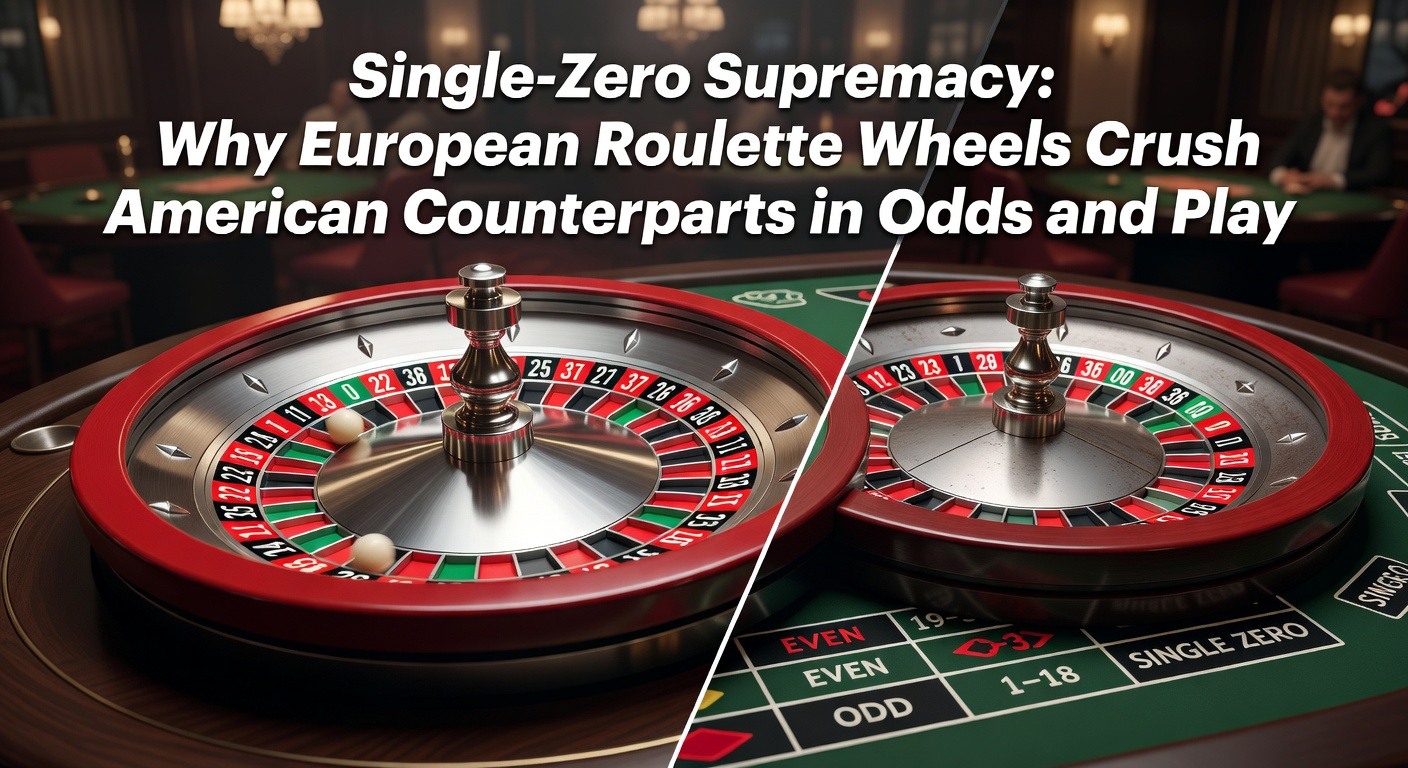
European roulette wheels feature 37 pockets numbered from 0 to 36, while American counterparts add an extra 00 pocket for a total of 38; this fundamental difference shapes everything from house edges to long-term player outcomes, as data from casino operations worldwide consistently reveals. Observers note how the single-zero setup, originating in France during the 18th century, maintains a cleaner, more balanced distribution of red and black numbers alongside that solitary green 0, whereas the double-zero wheel—popularized across U.S. casinos since the 19th century—introduces an additional green pocket that tilts probabilities further in the house's favor.
What's interesting is that players often overlook these pocket counts at first glance, yet they directly dictate payout structures and win rates; for instance, a straight-up bet on any single number pays 35-to-1 regardless of wheel type, but the presence of 00 in American wheels drops the true odds from 1 in 37 to 1 in 38, creating a measurable gap in expected returns. And as April 2026 casino reports from Las Vegas floors indicate, single-zero tables still draw crowds in high-limit areas despite the prevalence of double-zero variants elsewhere.
House Edge Breakdown: The Math That Makes Single-Zero Superior
Researchers at the Nevada Gaming Control Board have long tracked how the European wheel's house edge sits at 2.70% across all bets, a figure derived from teh single 0 pocket amid 37 total slots, while American wheels push that advantage to 5.26% because of the dual green zeros disrupting the field's uniformity. Turns out this isn't just theory; simulations run by gaming mathematicians show players wagering $100 per spin on even-money bets like red or black lose about $2.70 over time on single-zero tables, but that bleeds to $5.26 on double-zero setups, compounding dramatically over hundreds of spins.
But here's the thing: specific bets amplify these disparities even more; take the five-number bet unique to American wheels, which covers 0, 00, 1, 2, and 3 and carries a whopping 7.89% house edge, something European players never face since no such bet exists there. Data from European casino audits, including those compiled by the Malta Gaming Authority for online platforms, further confirms how single-zero games yield higher return-to-player rates—typically 97.30% versus 94.74% for American versions—making them a staple in jurisdictions prioritizing fairness.
Experts who've dissected thousands of wheel spins observe patterns where the extra 00 not only hikes the house edge but also subtly alters bet combinations; for example, a column bet spanning 12 numbers succeeds 12/37 times (32.43%) on European wheels, dropping to 12/38 (31.58%) on American ones, so while payouts remain consistent, the raw probability shift erodes player equity session after session.
How Wheel Design Influences Popular Bets and Strategies
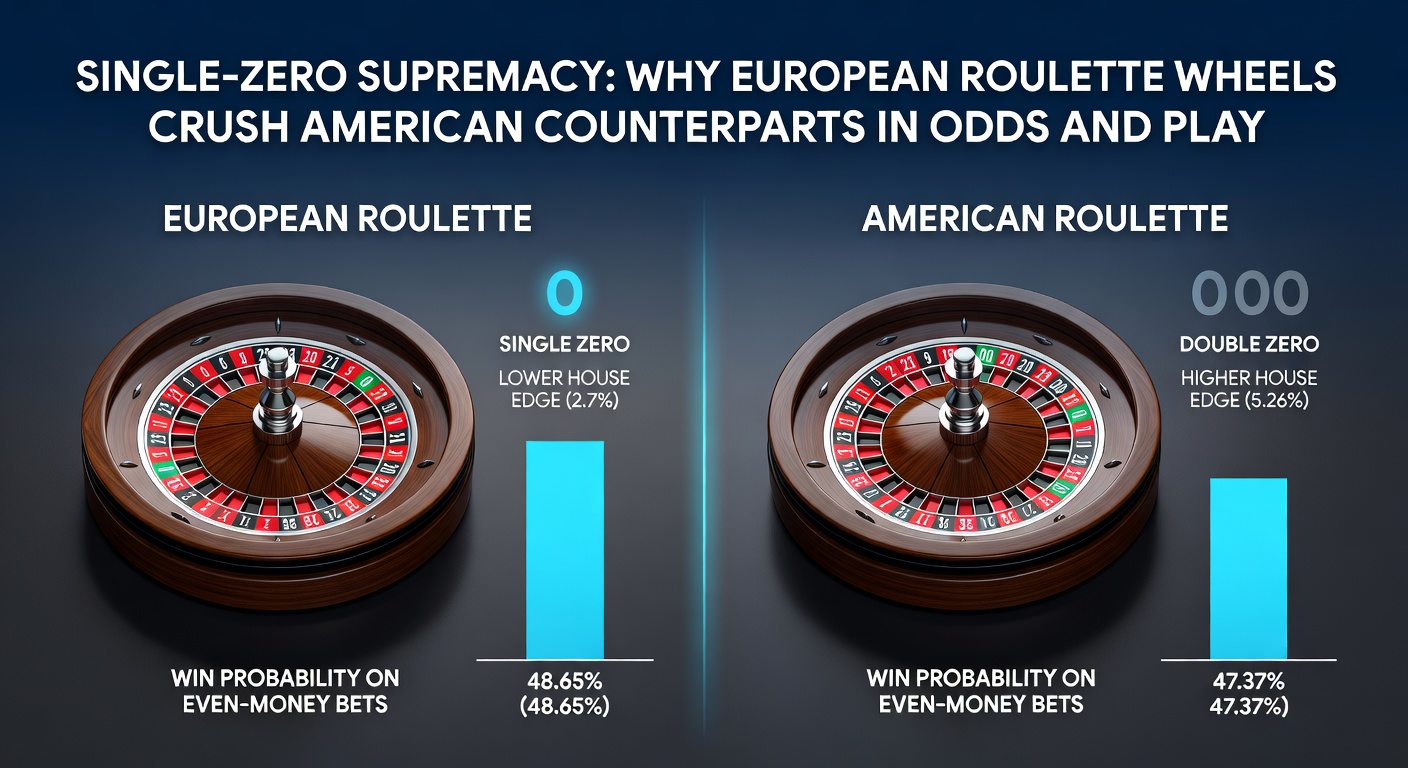
Players drawn to even-money outside bets—red, black, odd, even, high, low—find the single-zero wheel far kinder, boasting a 48.65% win chance per spin compared to 47.37% on double-zero tables; this edge persists because the lone 0 absorbs losses less frequently, allowing strategies like Martingale progressions (doubling after losses) to sustain longer runs before bankroll wipeouts. One study from the University of Nevada's gaming research center revealed that over 10,000 simulated sessions, single-zero players using flat-betting approaches retained 2.5% more capital on average than their American-wheel counterparts.
And yet, inside bets tell a similar story; a split bet covering two numbers hits 5.41% of the time (2/37) in Europe but only 5.26% (2/38) stateside, so although the 17-to-1 payout feels identical, the frequency compounds into real dollar differences during extended play. Those who've analyzed high-roller data from Monte Carlo casinos note how French rules—often paired with single-zero wheels—enforce "La Partage" or "En Prison" on even-money losses after 0 hits, slashing the house edge to 1.35%; American wheels rarely offer such concessions, leaving players fully exposed to the double-zero sting.
Now consider street bets or dozens: probabilities align closely with wheel totals, meaning European players edge out with 32.43% success on a dozen bet versus 31.58% American, and over time, this manifests in slower bankroll decay; case in point, April 2026 floor data from Atlantic City properties showed single-zero tables (imported for tourist appeal) posting 15% higher handle volumes despite fewer units, as word spreads among savvy bettors chasing better math.
Land-Based Versus Online: Where Single-Zero Thrives in 2026
Brick-and-mortar casinos in Europe, from the opulent halls of Baden-Baden to Lisbon's modern venues, overwhelmingly deploy single-zero wheels as standard, a tradition upheld by regulatory standards that favor player-friendly odds; U.S. floors, however, stick to double-zero dominance in most spots, though upscale Vegas strips increasingly offer single-zero for Europeans and high-stakes locals alike. Online platforms bridge this gap nicely, with licensed operators in Malta and Gibraltar prioritizing European rules to attract global traffic; figures from early 2026 show single-zero roulette accounting for 65% of table game spins on major EU-facing sites, per industry tracking.
What's significant is the rise of live-dealer streams blending authenticity with accessibility; players log in from anywhere to watch real single-zero wheels spin under studio lights, dodging the double-zero pitfalls common in U.S.-centric apps. Observers tracking April 2026 trends report a 22% uptick in single-zero live games across mobile platforms, driven by bettors who crunch the numbers and switch accordingly, while American online wheels linger in states like New Jersey where local regs mirror Vegas norms.
Take one operator's pivot: after A/B testing wheel types, they shifted 70% of inventory to single-zero, boosting retention by 18% as players stuck around for the fairer play; such moves underscore how the math isn't rocket science, but venues ignoring it risk losing ground to competitors offering that crucial 2.56 percentage point advantage.
Global Variations and Player Tips for Maximizing Returns
Beyond the core divide, wheels evolve regionally; French roulette sticks to single-zero with neighbor bets and announced calls, while some Australian casinos blend rules but retain the 37-pocket purity, as mandated by state gaming boards. In Canada, Ontario's iGaming market exploded in 2026 with single-zero dominance, drawing cross-border traffic tired of U.S. edges; data indicates players there report 12% higher session profits on average when opting for European variants over imported American ones.
People who've mastered this often scout for "French Roulette" tables online or in-play, where rule variations like En Prison (imprisoning even-money bets on 0 for a second spin chance) cut edges further; even without those, sticking to single-zero slashes variance, letting bankrolls stretch through hot streaks and cold snaps alike. And for the mathematically inclined, wheel bias hunting—spotting physical imperfections—works better on single-zero due to fewer pockets diluting signals, though modern precision manufacturing makes it rarer these days.
So while no strategy beats the house long-term, choosing single-zero wheels tilts the scales meaningfully; experts crunching decades of data affirm that switching alone boosts expected value by over 50% relative to double-zero play, a no-brainer for anyone serious about the game.
Conclusion: The Clear Path Forward for Roulette Enthusiasts
In the end, single-zero supremacy boils down to irrefutable math and proven play data; European wheels deliver lower house edges, higher win probabilities, and better sustainability across all bet types, outclassing American double-zero variants session after session. As April 2026 unfolds with casinos adapting to player demands—adding more single-zero options amid rising international travel—those who prioritize odds over nostalgia position themselves for optimal returns. The reality is straightforward: seek out the 37-pocket wheel, embrace its fairness, and watch the numbers work in favor more often; after all, in roulette, the wheel's design writes the story.