State Compact Negotiations Reshaping Available Draw Games and Table Variants in Sovereign Venues
David Frank · Jun 27, 2026
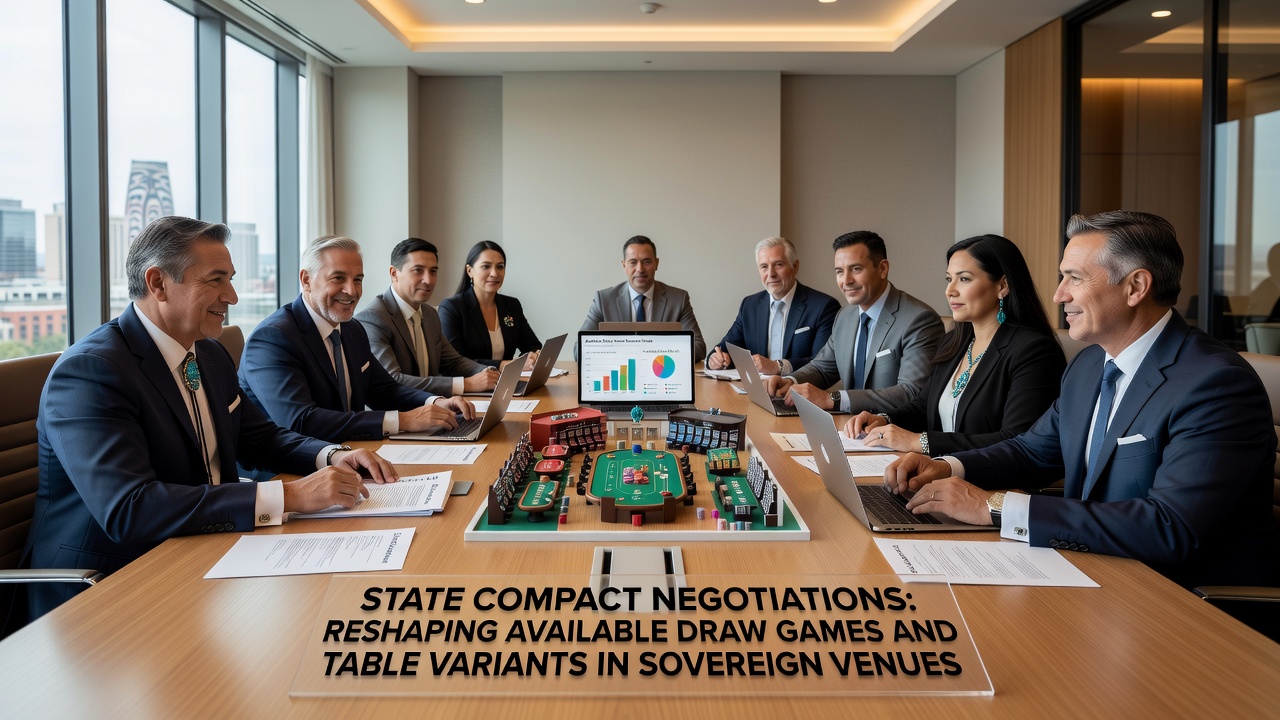
State Compact Negotiations Reshaping Available Draw Games and Table Variants in Sovereign Venues
State-tribal compact negotiations continue to influence which draw games and table variants operate inside sovereign venues across multiple jurisdictions, and data from the National Indian Gaming Commission shows steady adjustments in game approvals through the first half of 2026. These agreements, required under the Indian Gaming Regulatory Act, set the parameters for Class III gaming that includes lottery-style draw games and various table formats while tribes retain sovereign authority over operations on their lands.
Compact Framework and Game Classifications
Negotiations between state governments and tribal nations establish the specific draw games permitted alongside table game variants, and recent agreements have expanded options such as multi-state keno formats and progressive blackjack side bets in several western and midwestern states. Observers note that compact language often lists allowable game mechanics, prize structures, and player return percentages, which directly shapes what appears on casino floors.
Draw games covered in these documents typically encompass instant and scheduled lottery draws, while table variants range from standard blackjack and roulette to regional poker derivatives that incorporate community cards or modified betting rounds. Research from the Indian Gaming Association indicates that updated compacts signed in early 2026 have added new draw game hybrids in at least four states, each tied to revenue-sharing formulas that tribes and states negotiate separately.
Regional Variations Emerging in 2026
California tribal compacts finalized in spring 2026 introduced additional draw game options tied to statewide lottery linkages, whereas Oklahoma negotiations produced new table game variants featuring faster dealing sequences and adjusted house edges. These differences reflect local economic priorities and existing state lottery competition, and figures released by state gaming agencies show corresponding shifts in daily handle for both categories.
Draw Game Adjustments
Draw games in sovereign venues now frequently include accelerated draw frequencies and linked jackpot pools that cross reservation boundaries under compact provisions, and data collected through June 2026 reveals increased participation in these formats where states have approved the linkages. Compact terms also cap the number of draw terminals per facility in some regions, creating measurable differences in available offerings between neighboring tribal properties.
Table variants face similar scrutiny during negotiations, with states sometimes requesting limits on automated shuffling devices or specific side bet configurations that alter standard odds calculations. Those who've reviewed recent filings note that several mid-2026 compacts permit electronic table versions of traditional games when physical table counts remain below agreed thresholds.
Regulatory Oversight and Compliance Mechanisms
Once compacts receive approval from the Department of the Interior, tribal gaming commissions enforce the listed game specifications through regular audits and equipment testing, and reports issued in 2026 document how these oversight processes adapt when new draw frequencies or table configurations are added. States retain rights to review proposed game additions, yet final authority over sovereign land operations stays with tribal governments subject to the compact terms.
Academic analyses from the University of Nevada, Reno Center for Gaming Research have tracked how compact-driven changes affect game mix diversity, with data showing that venues operating under recently renegotiated agreements offer wider selections of both draw and table products compared with older compact structures still in force.
Revenue Allocation and Future Negotiations
Revenue-sharing percentages negotiated within compacts often correlate with the breadth of permitted games, and states that allow expanded draw game participation typically receive higher contributions from tribal facilities. Current discussions in several eastern states focus on integrating additional table variants that use random number generators while maintaining the physical dealing requirements outlined in existing language.
Those monitoring the process indicate that June 2026 filings contain provisions for periodic reviews of game offerings, allowing tribes and states to adjust draw game prize pools and table variant rules without full compact rewrites. This approach has produced incremental expansions rather than wholesale replacements of existing offerings.
Conclusion
State compact negotiations continue to determine the exact scope of draw games and table variants available inside sovereign venues, with 2026 agreements demonstrating measurable impacts on game availability and regulatory compliance structures. Ongoing talks will likely produce further refinements as both parties balance economic goals with the legal framework established under federal law.