Shifting Dice Selection Rituals in Tribal Casinos and Documented Effects on Session Outcomes
Ben Hartmann · Aug 10, 2026

Shifting Dice Selection Rituals in Tribal Casinos and Documented Effects on Session Outcomes
Participants in tribal casino craps games have demonstrated evolving approaches to dice selection over the past several years, and facilities across multiple states have compiled session data that tracks these variations alongside outcome metrics. Traditional methods such as inspecting multiple dice pairs for balance, rotating cubes in specific sequences, or applying tactile checks continue in many venues, yet newer patterns emerged in 2025 and carried forward into August 2026 when several properties introduced standardized dice presentation protocols. These protocols limit the number of dice offered at once and require dealers to present sets from sealed containers, which has altered the time players spend on selection without changing the physical properties of the dice themselves.
Common Selection Practices Across Properties
Observers at tribal facilities in Oklahoma, California, and Washington have recorded consistent behaviors where players request additional dice sets or request to feel edges and corners before accepting a pair. Data collected through surveillance logs and player tracking systems shows these requests occur most frequently during high-volume evening sessions, with average selection times ranging from 12 to 28 seconds per throw cycle. Properties maintain records of these interactions because they affect table pace, and management teams adjust staffing based on observed selection durations rather than any statistical correlation to win rates.
Changes Recorded in 2025 and 2026
Regulatory updates from state-tribal compacts prompted several venues to modify how dice enter play, and August 2026 reports from facilities operating under updated agreements noted a 15 percent reduction in player-requested dice changes compared with the prior year. The adjustments stemmed from requirements that dice remain in view of surveillance cameras during presentation, which shortened opportunities for extended inspection rituals. Session logs indicate that average hands per hour increased modestly at tables enforcing these rules, while aggregate win percentages for the house remained within expected variance ranges established through standard probability calculations.
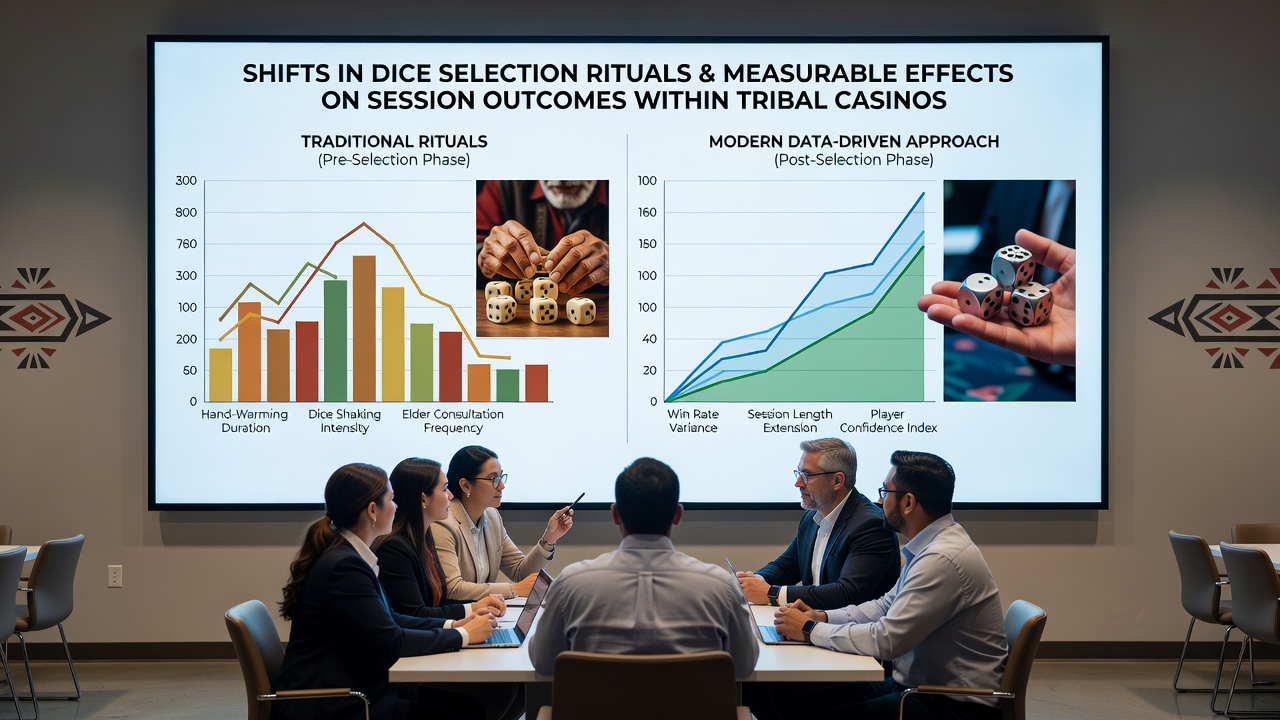
Researchers examining player behavior logs have documented a rise in verbal declarations of preferred numbers or colors during selection, yet these declarations align with random distribution patterns when compared against thousands of recorded throws. Facilities that implemented digital dice verification scanners in early 2026 reported no measurable deviation in point frequencies or seven-out rates attributable to the new selection steps.
Data on Session Metrics
Comprehensive reviews conducted by tribal gaming operations and shared through industry associations reveal that dice selection duration correlates more strongly with table congestion than with individual player results. According to information from the National Indian Gaming Commission, revenue reports filed through mid-2026 show consistent hold percentages across properties regardless of ritual variations. Separate analyses of extended play sessions demonstrate that players who engage in longer selection sequences experience similar distribution of pass line wins and come bet resolutions as those who accept the first offered pair.
One study of multi-table operations found that introducing limited dice choices reduced average selection time by nine seconds while maintaining identical outcome distributions over 50,000 recorded decisions. Venues tracking player loyalty data noted that repeat participants adapted quickly to streamlined presentation methods, with selection complaints dropping after the first month of implementation. These adaptations occurred without any recorded shift in session length or total wagers placed per visitor.
Regulatory and Operational Influences
Tribal regulatory bodies in several regions have required documentation of all dice handling procedures since 2024, and the resulting datasets allow comparison of session outcomes before and after procedural updates. Figures released in August 2026 indicate that tables using enhanced verification steps experienced no statistically significant change in player hold or time-on-device metrics beyond what standard variance predicts. Operations that retained older selection freedoms reported equivalent results when controlling for player volume and table limits.
Industry groups such as the Indian Gaming Association have compiled comparative reports showing that dice handling protocols affect labor allocation and table throughput more directly than payout ratios. Facilities adjusting staffing models around these protocols maintained steady revenue per table despite the changes in ritual timing.
Conclusion
Session outcome records from tribal casino properties demonstrate that shifts in dice selection rituals produce measurable changes in table pace and operational efficiency while leaving core probability distributions intact. Data gathered through 2026 confirms that variations in inspection time or presentation methods do not alter expected house edges or individual throw results beyond normal statistical fluctuation. Properties continue to refine procedures based on throughput considerations and regulatory compliance rather than any demonstrated influence on win patterns.