Sequential Probability Modeling: Contrasting Lottery Draw Mechanics with Extended Play Sessions at Craps Tables
Uma Hartmann · May 23, 2026
Sequential Probability Modeling: Contrasting Lottery Draw Mechanics with Extended Play Sessions at Craps Tables
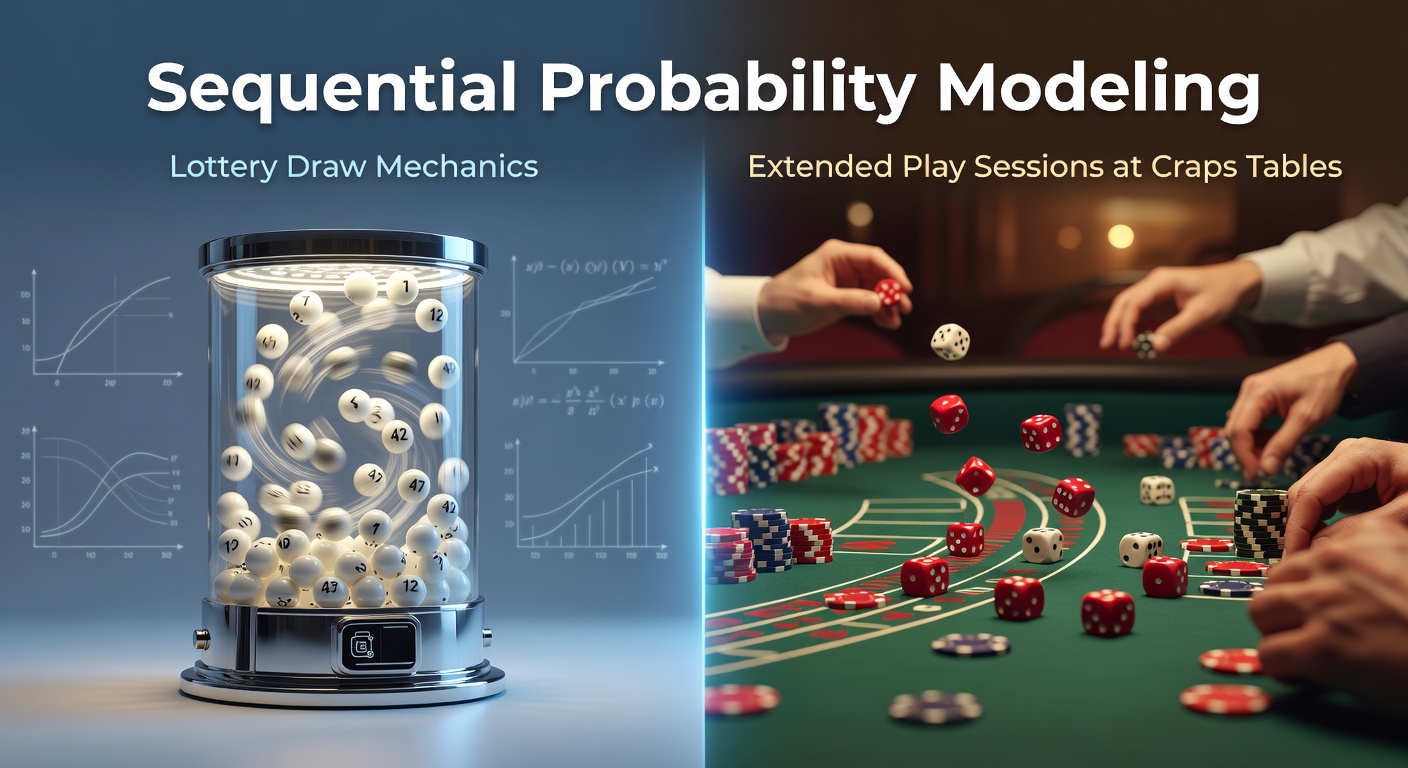
Sequential probability modeling examines how outcomes unfold across repeated trials, and this approach highlights clear differences between lottery systems and craps gameplay. Lottery draws operate as isolated events where each selection resets completely, whereas craps sessions generate chains of rolls that accumulate over hours or even days at regulated tables.
Lottery Draw Structures and Independence
State lotteries rely on mechanical or electronic randomization for each drawing, which produces independent results every time numbers are selected. Data from multiple jurisdictions shows that past draws exert no influence on future ones because the mechanism clears between events. Researchers at institutions tracking these systems confirm that the probability for any specific combination remains fixed regardless of prior sequences.
Sequential modeling in this context treats each draw as a standalone trial. When analysts apply Markov chains or basic binomial frameworks, the calculations stay simple since memoryless properties dominate. Figures released in early 2026 by North American lottery oversight bodies indicate consistent payout ratios across weekly or bi-weekly cycles, with no carryover effects from one event to the next.
Craps Table Dynamics Across Extended Sessions
Craps introduces a different sequential layer because players encounter dozens or hundreds of dice rolls during a single sitting. Each roll maintains independence under fair dice conditions, yet the overall session length creates layered outcome distributions that sequential models must account for through cumulative probability trees. Observers tracking Nevada table data note that shooter streaks and point resolutions follow patterns best captured by run-length encoding rather than single-event math.
Bankroll fluctuations become central here. A player who stays at the table for four hours faces repeated exposure to the house edge on every wager type, from pass line bets to place wagers. Studies compiled by the University of Nevada, Las Vegas Center for Gaming Research demonstrate how variance compounds across sequential rolls, producing wider distribution ranges than isolated lottery entries.
Key Contrasts in Probability Sequencing
The core distinction lies in event density and dependency structures. Lotteries space trials far apart with full resets, while craps compresses many trials into continuous sequences. This compression allows models to incorporate autocorrelation factors when examining bankroll trajectories or win-rate stabilization over time. Analysts who apply renewal theory find that craps sessions exhibit measurable clustering around certain resolution points, unlike the flat distribution seen in lottery number selections.
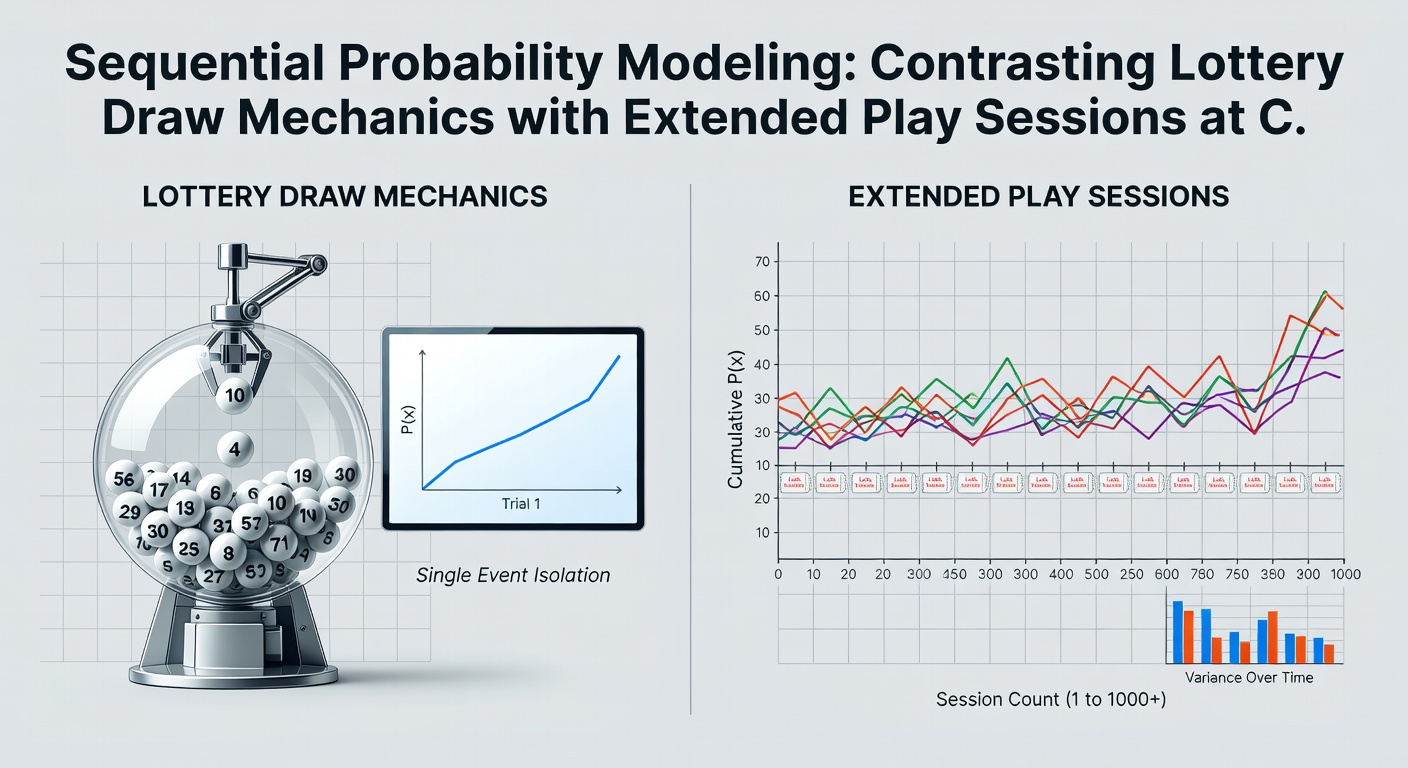
Session duration also alters effective edges. Short lottery participation involves one or two draws, whereas extended craps play multiplies decision points exponentially. Data compiled through May 2026 by the Nevada Gaming Control Board reveals that average session lengths at major Strip properties exceed 90 minutes, creating ample opportunity for sequential variance to manifest in player results.
Modeling Approaches and Practical Applications
Practitioners use Monte Carlo simulations to contrast the two formats directly. Lottery models require only combinatorial sampling for each independent draw, while craps models must iterate through state transitions that include come-out rolls, point establishment, and seven-out resolutions. Those who've examined output from both frameworks observe that craps sequences demand higher computational resources due to path-dependent branching.
Regulatory filings from Canadian provincial gaming authorities further illustrate these modeling differences when comparing electronic lottery terminals against live table games. The reports emphasize that sequential tracking tools help operators set table minimums and maximums to manage exposure across varying session lengths.
Conclusion
Sequential probability modeling therefore separates lottery mechanics, defined by sparse independent trials, from craps sessions characterized by dense chains of rolls. Accurate application of these models requires recognition of event spacing, memory properties, and cumulative exposure effects. Available data from gaming regulators and academic centers continues to support refined simulation techniques that distinguish these formats without overlap in their core probability structures.