Interstate Lottery Compacts Reshape Access and Prize Pools Across State Borders
Uma Hartmann · Jul 20, 2026
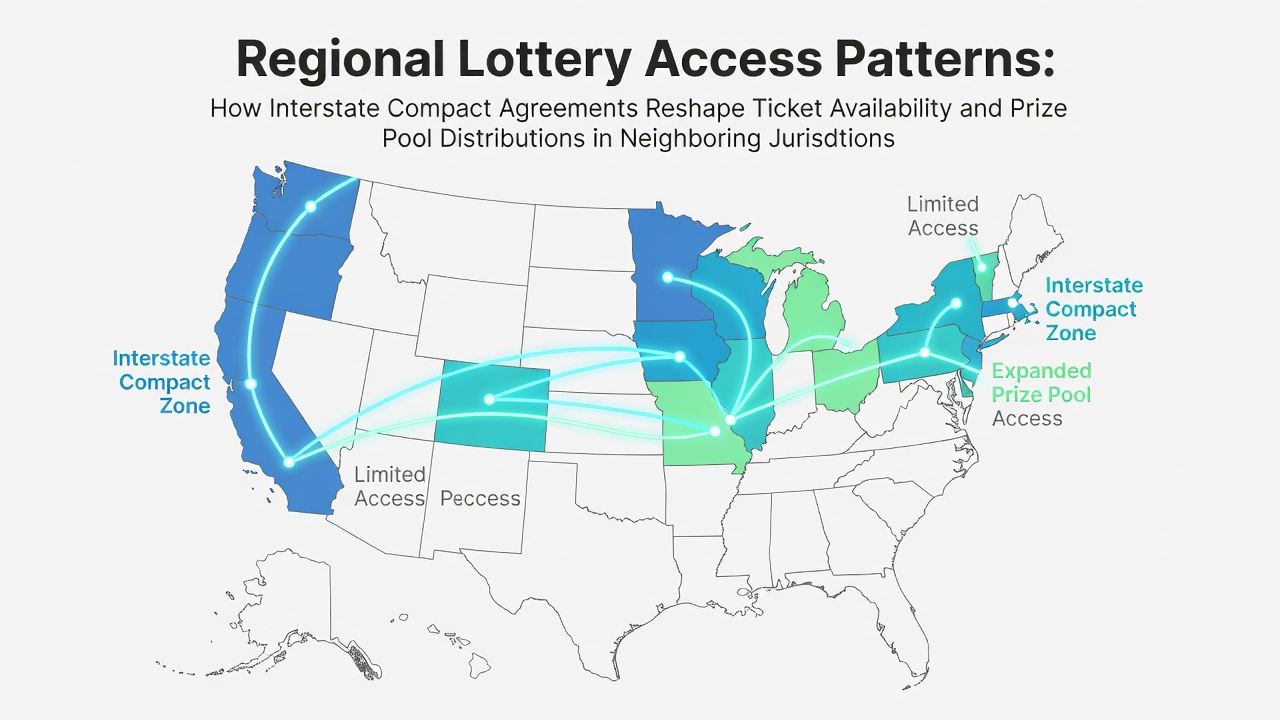
Interstate Lottery Compacts Reshape Access and Prize Pools Across State Borders
Interstate compact agreements among state lotteries have expanded steadily since the early 2000s, allowing participating jurisdictions to coordinate ticket sales and combine prize pools for large jackpot games. These arrangements operate under the framework of the Multi-State Lottery Association, which administers games such as Powerball and Mega Millions across more than forty states plus the District of Columbia. Data from the association shows that combined prize pools reached record levels in fiscal year 2025, with several draws exceeding $1 billion in advertised jackpots.
Mechanics of Compact Participation
States that join a compact agree to uniform game rules, shared advertising standards, and proportional allocation of prize money based on sales volume within each jurisdiction. Ticket availability extends across borders when retailers in one state sell tickets for games administered by another member lottery, although physical sales remain restricted to licensed outlets within compact boundaries. Observers note that this structure reduces duplication of administrative costs while increasing the frequency of large jackpots that attract players from multiple states simultaneously.
Regulatory filings submitted to state legislative committees in 2025 indicate that compact members must maintain separate accounts for local sales taxes and retailer commissions even when prize funds are pooled nationally. This separation preserves state revenue streams while allowing the overall jackpot to grow faster than any single-state game could achieve alone.
Effects on Ticket Availability in Border Regions
Residents living near state lines often encounter expanded purchasing options when neighboring states belong to the same compact. Retailers located within ten miles of a border report higher volumes of out-of-state buyers during rollover periods, according to sales reports compiled by the North American Association of State and Provincial Lotteries. Compact rules require participating lotteries to honor winning tickets purchased in any member jurisdiction, which simplifies redemption for cross-border players.
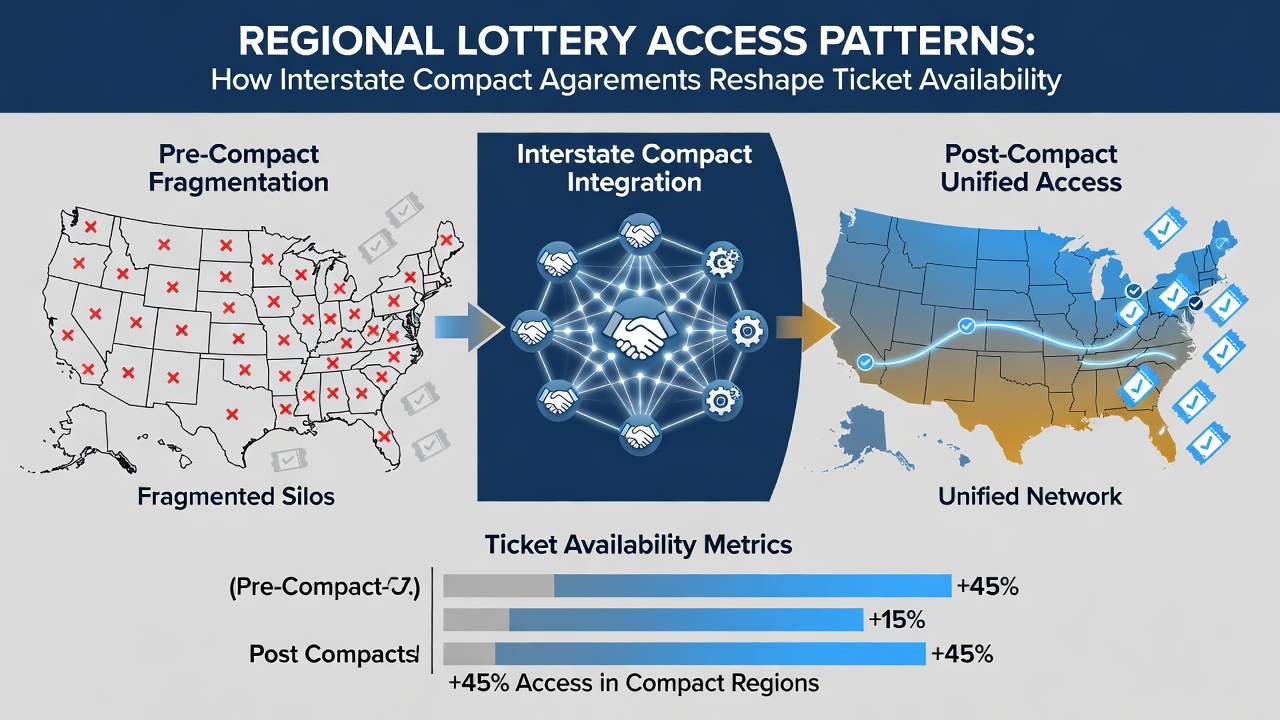
Yet physical ticket distribution still follows state licensing laws, so a player in one state cannot legally purchase tickets from a retailer in a non-compact neighbor. Researchers at the University of Nevada, Las Vegas tracked transaction patterns in 2024 and found that compact participation increased average weekly sales per border retailer by 18 percent compared with non-compact states during the same period.
Prize Pool Distribution Formulas
Prize allocations under interstate compacts follow a sales-based formula that credits each member state with a share of the total pool proportional to its contribution. When a jackpot rolls over without a winner, the added funds come from a percentage of ticket sales across all participating jurisdictions, which accelerates growth during high-interest periods. Financial statements released by compact administrators show that states with larger populations and higher per-capita ticket sales receive correspondingly larger slices of the prize liability.
Smaller states sometimes experience amplified jackpot growth relative to their local sales because they benefit from the larger sales base of populous neighbors. Actuarial reviews conducted for the Multi-State Lottery Association confirm that this leverage effect has contributed to more frequent billion-dollar jackpots since the 2010s, when several new states joined existing compacts.
Developments Observed Through July 2026
By July 2026, three additional states had ratified legislation to join the primary multi-state compact, bringing the total membership to forty-seven jurisdictions. Legislative records show that these new members cited increased revenue projections and reduced administrative overhead as primary motivations. Sales data released in the first half of 2026 reveal a 12 percent year-over-year rise in compact-wide ticket purchases, with border counties accounting for a disproportionate share of the increase.
Neighboring jurisdictions outside the compact continue to operate independent games, which creates noticeable differences in jackpot sizes and game features across state lines. Analysts tracking regional patterns report that players in non-member states occasionally travel to purchase tickets in compact states when jackpots reach elevated levels, although such travel remains subject to each state’s transportation and purchase regulations.
Conclusion
Interstate lottery compacts have produced measurable shifts in both ticket availability and prize distribution across participating states. Sales figures, regulatory filings, and academic studies document higher per-retailer volumes near borders and accelerated jackpot growth driven by pooled contributions. As membership expands, the formulas that allocate prize liabilities continue to balance state-level revenue needs with the benefits of larger combined pools.